
For Some People, Anxiety Isn’t Just in the Mind — It’s in the Chemistry
For Some People, Anxiety Isn’t Just in the Mind — It’s in the Chemistry
💛Anxiety isn’t just a feeling — it’s a storm that hijacks your body and mind.
One moment you’re fine, and the next your heart pounds, your chest tightens, and your thoughts race with no clear reason why.
Your palms sweat, your breathing becomes shallow — and the harder you try to calm yourself, the worse it gets.
You tell yourself to relax, but your mind keeps shouting “I can’t.” The tension builds until it feels like you’re suffocating.
For some, the panic reaches such intensity they end up in the emergency room, convinced it’s a heart attack — because that’s exactly what anxiety can feel like.
Yet beneath it all, your body isn’t betraying you.
It’s trying to protect you — just in the wrong way, at the wrong time.

Here’s the key point:
You’re not imagining it — anxiety doesn’t just live in your mind.
It floods your whole system, tightening muscles, disrupting digestion, raising your heart rate, and leaving you raw and restless — even when you’re utterly exhausted.
And here’s what most people miss…
If you’ve been searching for natural ways to treat anxiety, you’re not alone — especially if your mind won’t switch off, even when your body is begging for rest.
Many people are also searching for natural ways to relieve stress and anxiety that help calm the nervous system throughout the day — not just when symptoms reach breaking point.
At its core, anxiety isn’t just nervousness.
It’s a full-body overwhelm that can hijack your mood, sleep, digestion, and sense of safety.
At BalanSoul, we take anxiety seriously.
We look beyond labels and prescriptions to uncover the biochemical, genetic, environmental, and emotional patterns driving your symptoms — and we tailor your treatment with precision that meets you where you are.
 Not Just in Your Head — Let’s Decode the Root Causes Together
 Not Just in Your Head — Let’s Decode the Root Causes Together
Struggling with anxiety that doesn’t respond to typical solutions?
Book a free 15-minute discovery call and let’s map out whether this personalised approach could work for you.
What Is Anxiety?
What is anxiety, really?
Anxiety is a biological state of stress activation, not just a mental experience.
It’s what happens when your nervous system hits the panic button — and forgets to switch it off.
But what does this actually feel like?
You might recognise:
- Racing thoughts or a constant inner chatter that refuses to give you peace
- A nervous system on edge, even when life is “supposedly fine”
- Emotional flooding or sudden waves of panic that come out of nowhere
- Feeling wired and tired at the same time
- Gut discomfort, bloating, or nausea — leading many to wonder, can anxiety cause nausea?
- Sensitivity to noise, light, caffeine, or stress
For many, anxiety feels like being stuck in “fight or flight” mode — even when there’s no real threat in sight.
You can remind yourself you’re safe, but your body isn’t listening.
And here’s the frustrating truth:
While mindfulness or therapy can help, others find that no amount of meditation, yoga, or positive thinking quiets the inner chaos for long.
That’s because anxiety isn’t just in your head — it’s in your chemistry.
At BalanSoul, we look at what’s underneath:
your biotype, your nutrient status, your genetic wiring, and your nervous system history — because once your body finds balance again, your mind can finally exhale.
Anxiety: The Hidden Root of So Much Suffering
Anxiety is one of the most misunderstood conditions in modern medicine.
On the outside, it can look like worrying, overthinking, or avoidance.
But on the inside, it feels like a nervous system trapped in a cage of fire — overprotective, hyper-vigilant, and exhausted from trying to keep you safe.
This pattern is especially common when chronic pressure comes from the workplace — which is why so many people start searching for how to relieve stress from work once anxiety begins spilling into sleep, health, and relationships.
What most people don’t realise is this:
Anxiety underlies nearly every other mental-health challenge.
It’s often the first crack in the system — the pressure point that precedes insomnia, gut issues, panic attacks, and burnout.
Understanding why this happens is the first step to breaking the cycle.
So let’s look at how stress sets the stage.
It Starts with Stress… Then Everything Spirals
You already know what anxiety can do — that rising storm in your body and mind.
Now let’s look at what’s happening beneath the surface.
Anxiety doesn’t stay in one place.
It ripples through your body, changing digestion, hormones, sleep, and even your cellular chemistry.
For many, that rising storm begins early — waking up with anxiety before the day has even begun.
Here’s how the spiral unfolds:
First, the nervous system goes on high alert.
Adrenaline surges.
Your body prepares to run, fight, or freeze.
You feel wired, restless, tense — or sometimes completely numb.
Even when you know you’re safe, your body doesn’t get the memo.
This is why many people experience waking up with anxiety, heart racing before the day has even begun.

Then the gut starts to falter.
Stomach acid drops. Enzymes decline. Bloating and dysbiosis take hold.
Inflammation rises. Leaky gut becomes more likely.
👉 This is where anxiety and gut health start feeding into each other — a loop of tension, discomfort, and stress hormones that fuel one another.
Next comes the chest pain, the racing heart, the sweaty palms.
This is often the point where fear takes over completely.
Your chest tightens.
Your heart pounds or skips.
Your breathing shortens.
Your hands sweat.
Your body feels out of control.
Many people rush to emergency rooms convinced they’re dying — because anxiety can mimic the symptoms of a heart attack almost perfectly.
It’s no surprise that so many people search anxiety attack versus heart attack, desperately trying to understand whether what they’re experiencing is psychological, physical — or life-threatening.
The ECG comes back normal.
Blood tests show nothing “wrong.”
You’re told your heart is fine.
But the symptoms don’t stop — and neither does the fear.
This is where anxiety becomes especially cruel.
The physical sensations are real.
The fear is real.
But the reassurance doesn’t land — because your nervous system is still in emergency mode.
And once this fear loop begins, every bodily sensation becomes a threat.
Every heartbeat is monitored.
Every tight breath feels dangerous.
This is how anxiety trains the body to stay on high alert — not because you’re weak or imagining things, but because your stress-response system has lost its ability to stand down.
Why This Matters: Biochemistry Doesn’t Lie
Anxiety doesn’t just make you feel off — it changes your biology.
Over time, chronic anxiety places real, measurable strain on the body.
Chronic anxiety can:
- Elevate cortisol, suppressing digestion, immunity, and memory
- Imbalance glutamate and GABA, leading to inner chaos
- Increase copper, deplete zinc and B6
- Disrupt methylation, mitochondrial function, and even gut flora
And when anxiety goes unaddressed for too long, the effects compound.
Left unchecked, anxiety can:
- Drive digestive issues (bloating, IBS, nausea)
- Suppress detoxification and increase toxic load
- Disrupt hormones and fertility
- Increase pain sensitivity
- Lead to burnout, depression, or chronic fatigue
But here’s the encouraging part.
When we address the biochemistry, the nervous system can finally begin to settle.
Relief doesn’t come from willpower — it comes from restoring balance.
That’s why we offer natural ways to relieve stress and anxiety that help restore nervous system function at the root.
🧠 Your Anxiety Has a Biochemical Signature — Let’s Find It!!!
If your anxiety feels like it has a life of its own, it’s time to look deeper. Let’s explore your brain chemistry, nutrient patterns, and stress physiology — starting with a free 15-minute discovery call.
Why BalanSoul Focuses So Deeply on Anxiety
Because when we lift the weight of anxiety, everything else begins to heal.
At BalanSoul, we don’t see anxiety as a stand-alone condition — we see it as a signal.
When anxiety is supported at the root:
The gut begins to heal
Sleep returns
Hormones regulate
Energy rises
The mind becomes clear again
That’s why we focus on natural ways to treat anxiety that restore the entire system — from the inside out.
Healing anxiety isn’t just about calming nerves.
It’s about restoring the entire system — from the inside out.
We use anxiety and stress as a compass for health — especially when helping clients learn how to relieve stress from work and restore balance across the entire system.
When the nervous system is balanced, other processes — digestion, mood, immunity, hormones — begin to realign naturally.
Think of it like a ripple in a pond.
When you drop calm into the centre, the waves of balance spread outward — touching every cell, every organ, every thought.
That’s why anxiety is often the first thing we address, whether someone comes in for depression, fatigue, gut issues, or hormone imbalance.
When the storm at the centre settles, the whole system starts to heal.
A Personal Note on Mind-Body Healing
While our naturopathic protocols target anxiety at the biochemical level — using oral supplements, amino acids, herbal adaptogens, and nutrient therapies to restore brain chemistry — true healing also happens through the nervous system itself.
Just as one calm drop can send ripples across still water, the same happens when the mind becomes quiet.
That calm radiates outward — balancing hormones, slowing the heart rate, easing tension, and clearing thought.
But here’s the part many people overlook.
Meditation is not optional “extra care.”
It’s the flicker at the very centre — the pulse of stillness that awakens balance throughout every cell, every organ, every thought.

When it comes to calming the system, meditation is the direct antidote to anxiety.
It works at a level that even the most precise nutrients can’t reach — the level of consciousness itself.
Think of it as the bridge between the unseen and the physical:
- A thought alone can quicken your pulse
- A memory can bring tears
- Simply imagining a lemon can make your mouth water
That’s the power of the mind–body connection.
Consciousness moves matter.
Meditation uses that same principle in reverse — using awareness to calm the body, lower adrenaline, and gently retrain the brain’s stress circuitry.
It doesn’t replace biochemistry — it completes it.
Together, they create a ripple effect of healing from the inside out.
Explore the Anxiety Meditation Bundle
To support this deeper layer of healing, I’ve partnered with Dr. Emmett Miller, one of the pioneers of mind–body medicine, to offer access to his renowned guided programs via my sister site, MindDivine.com.
So what exactly does this include?
A carefully selected suite of evidence-based guided imagery tools designed to calm the nervous system and restore inner safety:
- 🩺 Blood pressure & pain
- 😴 Insomnia
- 🧠 Trauma recovery
- 🌿 Anxiety & panic (featured below)
For anxiety and panic in particular, I’ve hand-selected a bundle of the most effective programs and brought them together on a single page:
👉 The Power Is Within – Anxiety Meditation Bundle
You can even listen to a FREE sample of each track before diving in.
Not sure how to handle an anxiety attack when it strikes?
You’re not alone.
That’s exactly why this bundle includes short, practical sessions you can reach for in the moment — tools that calm the body and steady the breath when panic hits hard.
If you’ve ever wondered about the difference between panic attacks and anxiety attacks, you’re not alone — both can feel overwhelming, but they stem from slightly different stress responses.
🌼 Featured Track: Abolish Anxiety
Based on Dr. Miller’s legendary program, Abolish Anxiety is a powerful self-healing meditation that combines guided imagery, insight, and deep relaxation to reduce anxiety, panic, and overwhelm.
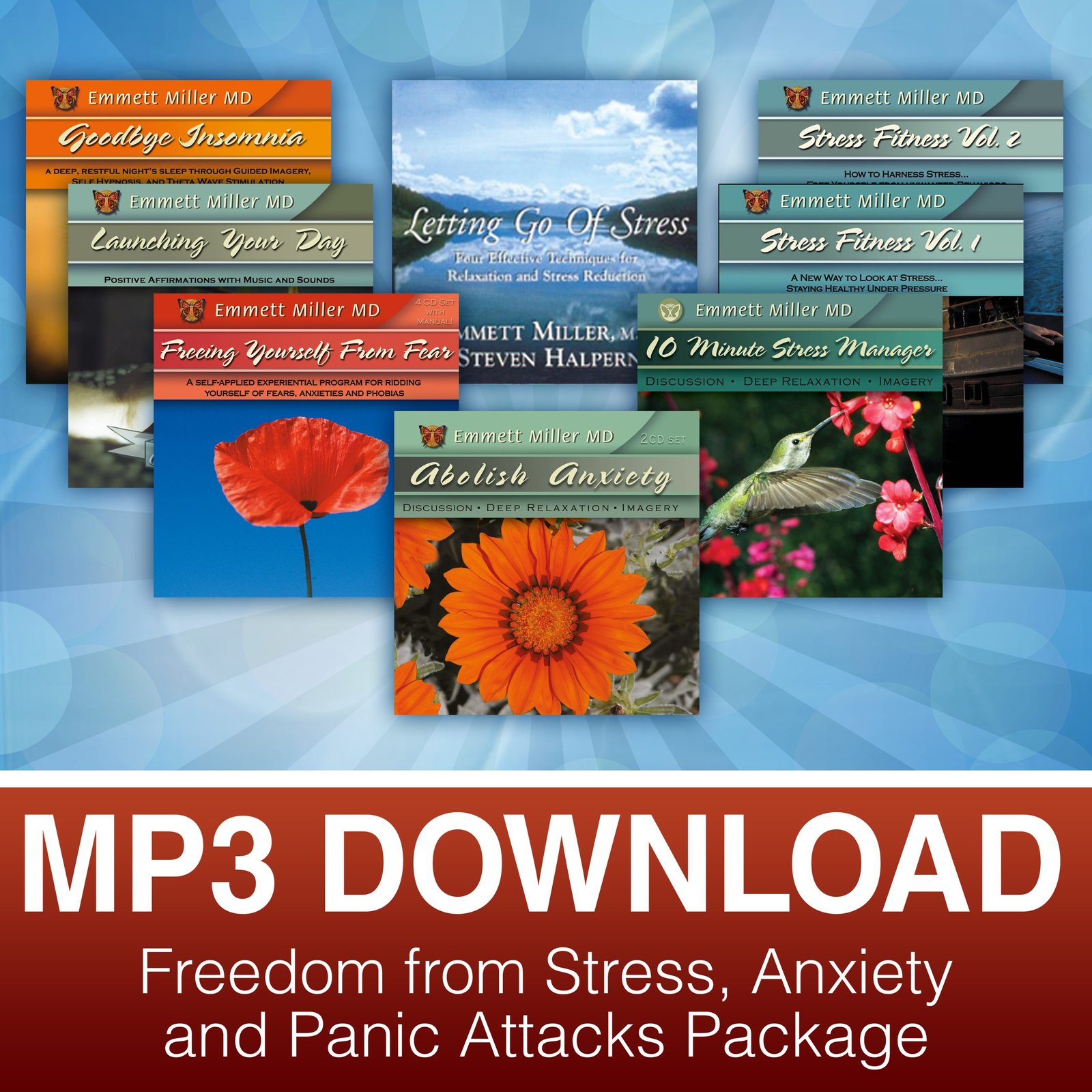
🧘♀️ Freedom from Stress, Anxiety, and Panic Attacks
This complete digital package includes multiple sessions designed to calm the nervous system, reduce hypervigilance, and restore resilience.
🛒 Prefer a single track to start with?
Try [Abolish Anxiety] as a standalone MP3 to test the method before exploring the full bundle.
Signs & Symptoms of Anxiety
We touched earlier on how anxiety feels — the racing mind, the pounding heart, the sense of unease that won’t switch off.
But now, let’s look a little closer at how it shows up in the body.
Some of the early signs of anxiety attack can feel subtle — a racing mind, clenched jaw, or skipping heartbeat — long before full panic sets in.
Anxiety isn’t just an emotional state — it’s a full-body experience.
It can affect digestion, hormones, blood pressure, and even the way the brain interprets pain.
Here are some of the most common physical symptoms people report:
- Racing thoughts or constant inner tension
- Digestive upset or nausea
- Chest tightness or heart palpitations
- Dizziness or light-headedness
- Trouble sleeping or staying asleep
- Muscle tension, jaw clenching, or restlessness
- Feeling on edge, jumpy, or hypersensitive

Can anxiety cause chest pain?
Yes — chest pain is a common yet frightening symptom of anxiety.
It’s often caused by muscle tension, hyperventilation, and surges in stress hormones like cortisol and adrenaline. While it’s always important to rule out cardiac issues, anxiety is a surprisingly frequent culprit.
Can anxiety cause digestive upset?
Absolutely.
Digestive upset is one of the most common physical signs of anxiety. When your brain senses danger, it can redirect blood flow away from the gut — leaving you with nausea, bloating, or even vomiting.
Can anxiety cause dizziness?
Yes.
Anxiety can trigger dizziness, light-headedness, or a sense of being off-balance — especially during panic attacks or in crowded environments. This is due to changes in breathing, blood pressure, and vestibular responses.
Does anxiety cause headaches?
Yes — and the link is often biochemical.
Tension, histamine buildup, neurotransmitter imbalances, and low magnesium levels are just some of the underlying drivers that can contribute to anxiety-related headaches.
Root Causes & Contributing Factors
Anxiety is rarely caused by just one thing.
More often, it’s the result of a perfect storm — where chemistry, life experience, and even consciousness itself all interact.
But here’s the deeper truth:
At BalanSoul, we see anxiety as both biochemical and spiritual.
When the body’s chemistry loses rhythm, the mind loses calm.
And when the mind is restless, it sends ripples through the nervous system — and every cell feels it.
True healing begins when we balance all three layers: body, brain, and being.
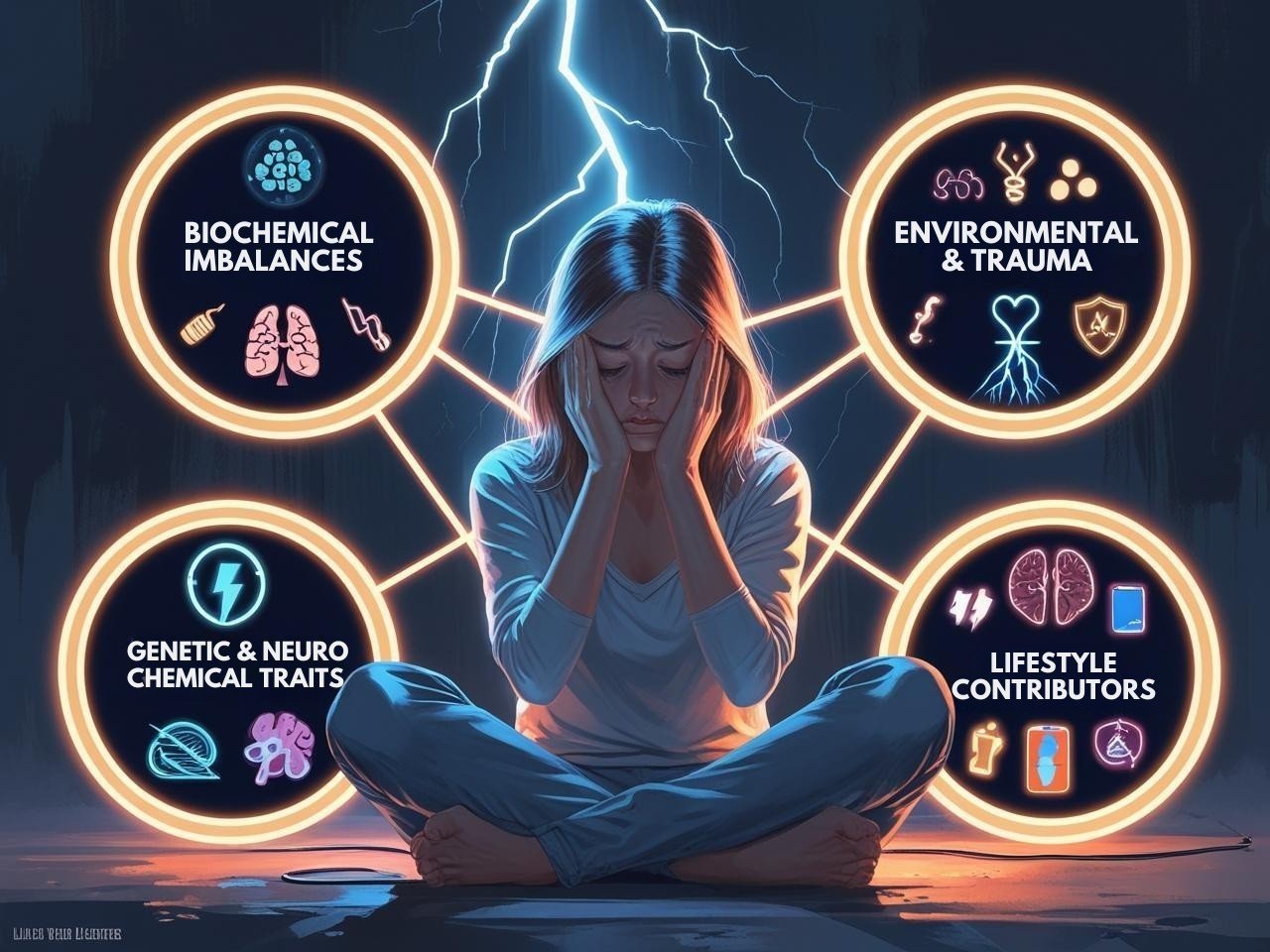
Biochemical Imbalances
Many of these drivers are invisible to standard mental-health screening — yet they profoundly influence mood and stress tolerance.
So what does this actually look like?
Often it involves patterns such as:
- Low GABA / High Glutamate — overstimulation, sensory overload, racing thoughts
- Elevated Histamine — linked to undermethylation and obsessive rumination
- Zinc / Copper Imbalance — copper drives norepinephrine; zinc calms it
- Mitochondrial Dysfunction — poor cellular energy worsens the fatigue–anxiety loop
- Neuroinflammation — driven by gut issues, toxins, or oxidative stress
Meditation and trauma-informed therapies help quiet these stored “echoes,” teaching the body that it is finally safe to relax.
Genetic & Neurochemical Traits
Your genes influence how your brain manages stress and neurotransmitters.
Some people are simply wired for higher sensitivity — but understanding your genetics can turn that sensitivity into strength.
You may see patterns like:
- MTHFR, COMT, MAO-A polymorphisms — affect serotonin, dopamine, and adrenaline clearance
- Pyrrole Disorder (Pyroluria) — stress intolerance, introversion, sensory sensitivity
- Histamine Intolerance — headaches, panic, flushing after certain foods
- Overmethylation — linked to panic attacks and chemical sensitivity
- Undermethylation — linked to internal tension, OCD traits, and perfectionism
🧬 Your genes are not your destiny — they’re the blueprint. But it’s your environment, nutrition, and consciousness that decide how that blueprint is expressed.
Lifestyle Contributors
Modern life can be a minefield for anxious brains.
Common contributors include:
- Caffeine or energy drinks
- Skipping meals or low protein intake
- Excess screen time or blue light at night
- Nutrient-depleted diets
- Sedentary living with no outlet for nervous system discharge
Just as meditation can calm the mind, conscious lifestyle changes can calm the body — each one creating ripples of healing that reach the brain, hormones, and heart.
🌿 A Spiritual Note
Anxiety is not just a disorder — it’s the body’s way of calling us back to balance.
When consciousness is unsettled, the brain loses rhythm and the heart loses ease.
Practices like meditation, breathwork, prayer, or time in nature reconnect the body’s chemistry with the mind’s stillness — allowing the nervous system to finally exhale.
Testing & Functional Investigations
Anxiety can speak through both symptoms and silence.
Sometimes what feels “emotional” is actually biochemical — rooted in nutrient imbalances, genetic variations, or subtle inflammatory patterns that ordinary tests overlook.
But here’s the important part:
At BalanSoul, we don’t just treat the surface.
We explore the terrain underneath — the chemistry, metabolism, and nervous-system feedback loops that shape your emotional landscape.
Here’s how we translate what you feel into what we can actually measure.

Walsh-style Biotype Testing:
- Whole Blood Histamine — distinguishes over- vs undermethylation
- Pyrrole Testing (HPL urine) — screens for pyrrole disorder
- Zinc : Copper Ratio — detects copper overload or deficiency
- Plasma Ceruloplasmin — identifies hidden copper retention
Each biotype tells a different story — uncovering the why behind your symptoms, not just the what.
Functional Panels:
- Cortisol (4-point saliva test) — assesses adrenal rhythm and burnout
- Methylation Gene Panel — MTHFR, COMT, MAO-A, DAO
- OAT Test (Organic Acids) — maps gut flora, mitochondrial function, brain inflammation
- Heavy Metals / Mold Markers — screens for hidden toxic burden
- Comprehensive Nutrient Panel — B6, zinc, magnesium, iron, folate, B12, and more
🩸 Testing brings clarity — turning uncertainty into insight, and helping us craft precise, personalised protocols that calm the mind by balancing the body.
Discover Your Walsh Biotype — Free Questionnaire
You’ll receive a personalized bar graph of your likely biotype scores.
🔒 No cost, no spam — just insights.
Natural Treatments That Actually Work
No two people with anxiety share the same root cause — so why should they share the same treatment?
At BalanSoul, we don’t follow a single model.
Your plan may include nutrients, herbs, adaptogens, or biotype-based protocols — all chosen to support calm at the biochemical, physical, and emotional levels.
But here’s why this matters:
When nutrient systems fall out of rhythm, the nervous system can’t find stillness — no matter how hard you try to “relax.”
That’s where targeted support makes all the difference.
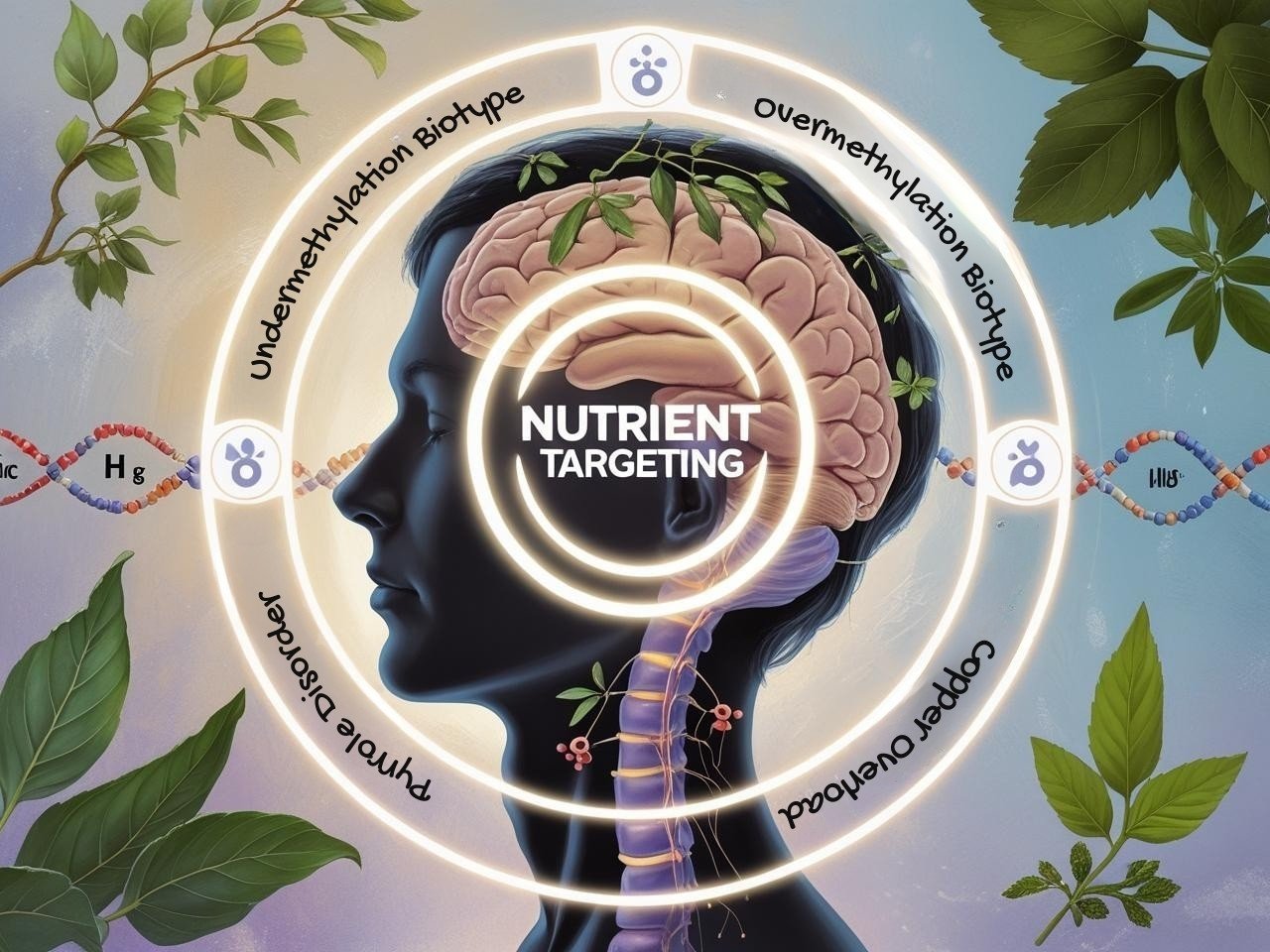
Targeted Nutrient & Biotype Support
When nutrient systems fall out of rhythm, the nervous system can’t find stillness.
Functional nutrient therapy helps re-establish the biochemical foundation for calm.
Common patterns and supports include:
Undermethylators (High Histamine)
- Benefit from: SAMe, Methionine, Magnesium (P5P), Zinc, TMG
- Caution: Folate can worsen symptoms in this group.
Overmethylators (Low Histamine)
- Benefit from: Folate, Niacin, B12, GABA, Magnesium, Herbal adaptogens
- Caution: Avoid SAMe/methionine (can trigger panic or agitation)
Pyrrole Disorder
- Benefit from: High-dose Zinc, Activated B6 (P5P), Biotin, Evening Primrose Oil
- Function: Reduces oxidative stress and rebuilds stress tolerance
Copper Overload
- Treated with: Zinc, Metallothionein Promoters, Selenium, Molybdenum, B6
- Result: Less norepinephrine/adrenaline → calmer mood and better hormone balance
Each biotype tells a different story — uncovering the why behind your symptoms, not just the what.
These targeted biochemical patterns form part of the deeper clinical model known as the Walsh Protocol, which maps unique nutrient and neurotransmitter imbalances that shape mood, motivation, and emotional wellbeing.
This is one of the core foundations of how we understand — and treat — anxiety at BalanSoul.
Curious to learn more about this evidence-based approach?
Discover how targeted nutrient therapy can restore biochemical balance, improve mood stability, and transform emotional wellbeing.
→ Visit our dedicated page on The Walsh Protocol to learn how this pioneering framework bridges brain chemistry and natural healing.
Clinical Pearls
These aren’t just theories — they’re consistent healing patterns I’ve witnessed again and again with my clients at BalanSoul…
- Pyrrole disorder is often improved dramatically with zinc, B6, and evening primrose oil
- Copper overload is common in anxious women with PMS or hormonal sensitivity — zinc helps rebalance
- Undermethylators often lean toward perfectionism, internal tension, and OCD traits — and respond well to SAMe/methionine
- Overmethylators often have high empathy, panic, and chemical sensitivity — and may worsen with methyl donors
Why It Works: The Science Behind Nutrient Targeting
Nutrients work because they restore the body’s communication network — helping the brain, nerves, and cells speak the same biochemical language again.- Zinc is a cofactor in over 300 enzymes, supports GABA synthesis, and opposes copper’s excitatory effects on the brain
- SAMe is a universal methyl donor critical for neurotransmitter metabolism — especially serotonin, dopamine, and norepinephrine
- P5P (active B6) is essential for converting glutamate (excitatory) into GABA (calming)
- Methionine feeds the methylation cycle and supports detoxification, particularly in undermethylators
- Magnesium threonate crosses the blood–brain barrier and supports cognition and HPA-axis modulation
Important Caution

Biotype-based nutrients must be matched carefully.
- Folate can worsen anxiety in undermethylators
- SAMe can trigger panic in overmethylators
Always assess or test before starting.
 Please don’t attempt to self-treat.
The guidance on this page is not intended as a DIY supplement protocol.
We strongly encourage working with a naturopath or functional practitioner trained in the Walsh Protocol, who can:
- Accurately identify your biotype
- Recommend the right nutrients
- Select clinically effective brands
- Adjust dosages and timing based on your individual response
Botanical & Nutrient Supports
Herbal medicine can be profoundly effective for calming the mind, settling the body, and supporting nervous-system repair — without dulling emotional awareness.
Here’s the key:
Each herb has a distinct signature based on its energetic pattern and neurochemical action.

- Kava (Piper methysticum) — rapid-acting anxiolytic; eases muscle tension, restlessness, and overthinking while promoting sociability
- Passionflower (Passiflora incarnata) — quiets circular thoughts and physical agitation; ideal for ruminating minds and restless sleep
- Lemon Balm (Melissa officinalis) — gentle mood booster that lifts emotional tension and calms digestive anxiety
- Zizyphus (Ziziphus jujuba) — traditional Chinese herb for nervous exhaustion and light, disturbed sleep
- Chamomile (Matricaria recutita) — supports digestion, progesterone balance, and nervous-system relaxation
- Skullcap (Scutellaria lateriflora) — nourishes depleted nerves and helps prevent rebound anxiety
- California Poppy (Eschscholzia californica) — both analgesic and anxiolytic; reduces pain-linked anxiety and promotes deep rest
- Jamaican Dogwood (Piscidia piscipula) — calming and mildly sedative; particularly helpful when physical pain and anxiety coincide
- Magnesium (Glycinate or Threonate) — eases muscle tension, stabilises NMDA receptors, and supports restorative sleep
- NAC & Taurine — regulate the GABA–glutamate balance and reduce excitatory stress chemistry
- Phosphatidylserine & Ashwagandha — lower cortisol, repair HPA-axis balance, and rebuild stress resilience
- Curcumin & Saffron — anti-inflammatory, neuroprotective, and mood-stabilising botanical allies
These combinations don’t just calm anxiety — they often improve energy, digestion, sleep, and emotional stability, because the nervous system finally feels safe enough to heal.
Clinical Snapshot: Targeted Nutrient Response
“I’ve had anxiety for over 15 years. I’ve tried everything — medications, therapy, diets, supplements — but nothing lasted. When I finally did the histamine and copper testing, it made total sense. I was an undermethylator with pyrrole disorder and copper overload. Within six weeks on the targeted nutrient protocol, I could finally exhale. It felt like my nervous system was allowed to rest for the first time in years.”
— 🧠 Typical client experience shared with permission | BalanSoul Clinical Observation
Why Choose BalanSoul — And What to Expect When Working With Us
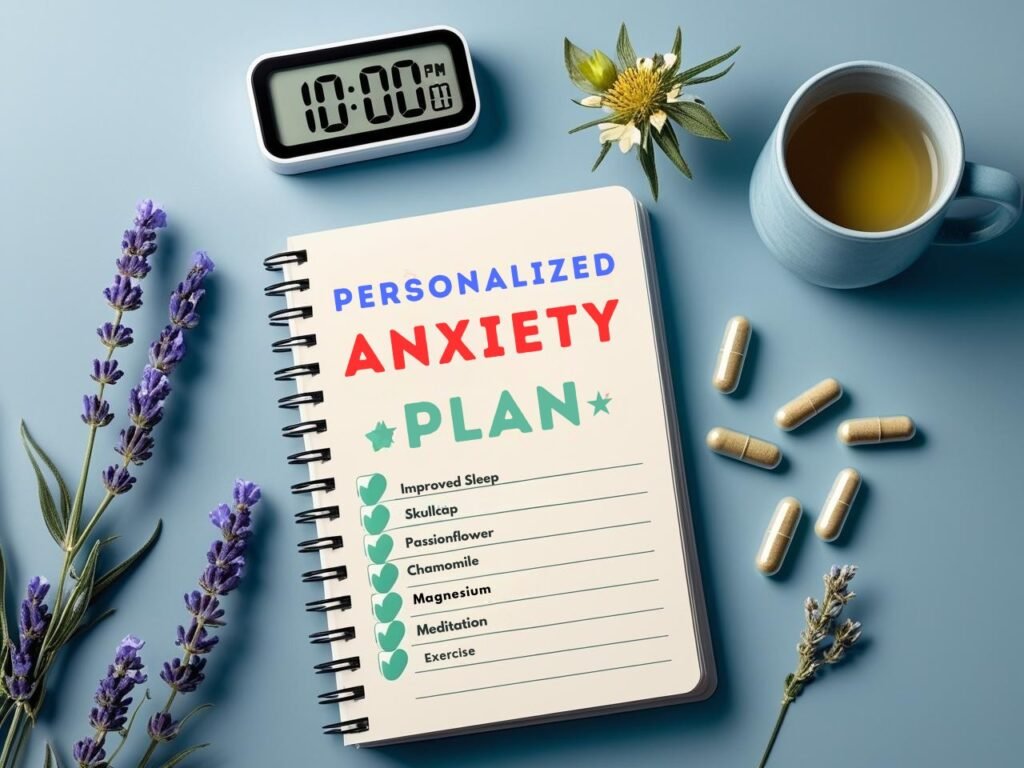
Anxiety doesn’t just affect your thoughts — it affects your body, your sleep, your relationships, and your sense of safety in the world.
That’s why our care is personal, measured, and deeply human.
At BalanSoul, we don’t rush decisions or apply one-size-fits-all protocols.
We walk with you — patiently, strategically, and compassionately — whether you’re living with long-standing anxiety, stress-related burnout, panic attacks, or nervous system overload.
Your Initial Consultation (90 Minutes)
Your first session is a comprehensive 90-minute consultation — not a quick check-in or symptom list.
This time allows us to understand the full picture, including:
- Your anxiety history and symptom patterns
- Triggers such as stress, trauma, sleep disruption, or work pressure
- Medication use, sensitivities, and past treatment experiences
- Nutrient status, nervous system load, and lifestyle factors
- Your goals, concerns, and pace preferences
This depth gives us clarity — so we move forward safely, thoughtfully, and proactively, rather than reactively.
What You’ll Receive
Based on your history, symptoms, and biochemistry, you’ll receive:
A personalised anxiety care plan, grounded in functional testing
Targeted nutritional and supplement guidance, aligned with Walsh Protocol and functional psychiatry principles
Clear education, so you understand what’s happening in your body — and why
Lifestyle and nervous system support, tailored to stress resilience and emotional regulation
A step-by-step roadmap, not a generic protocol
Our focus is always on addressing root causes — not just managing symptoms.
Ongoing Support (Not One-Off Care)
Anxiety recovery is rarely linear — and neither is our care.
As you move through each phase, we continue to:
Adjust nutrients and strategies as your system responds
Support nervous system regulation and emotional stability
Help distinguish temporary setbacks from true progress
Refine your plan using real-time feedback, not assumptions
This is collaborative care, at your pace — focused on restoring trust in your body, not forcing results.
There is a path forward — one step at a time.
With informed, compassionate support, the nervous system can stabilise, clarity can improve, and meaningful connection can be preserved.
You don’t have to rush.
You don’t have to push.
And you don’t have to do this alone.
Ready to Take the Next Step?
This isn’t just about managing anxiety. It’s about rebuilding your foundation — so peace, presence, and joy can return.
✔️ Your anxiety is not a character flaw. It’s a chemical imbalance — and it can be rebalanced.
Here’s how to get started:
- 💬 Book a free 15-minute discovery call
- 🧪 Explore your testing options
- 📄 Download our Pre-Consult Intake Form
- 👉 Click here to get started
FAQ
What’s the difference between panic attacks and anxiety attacks?
While anxiety attacks build slowly and often linger, panic attacks tend to appear suddenly and peak within minutes. Both may overlap — but understanding the difference helps guide treatment.
Why do I feel worse on some supplements?
Anxiety can worsen with the wrong intervention. For example, folate can worsen symptoms in undermethylators. SAMe may spike panic in overmethylators. That’s why biotype testing is critical.
Can I do this if I’m on medication?
Absolutely. Many of our clients are on antidepressants or benzos. We tailor supports to be safe and complementary — and help you discuss tapering with your doctor if/when you’re ready.
How do I know which biotype I am?
We determine this using functional lab testing, symptom patterns, and clinical markers. You’ll get a clear summary of your results with explanations.
I’m overwhelmed by stress at work — what helps?
We address work-related anxiety by rebalancing stress chemistry and nervous system resilience. Functional testing helps us understand how your body is responding to prolonged stress.
Can anxiety cause dizziness?
Yes — dizziness is one of the most frequent and disorienting physical symptoms of anxiety.
It can result from rapid breathing, blood pressure shifts, or the brain’s misinterpretation of stress signals.
So if you’ve found yourself Googling “can anxiety cause dizziness?” — the answer is absolutely.
🧭 Still not sure where to begin? Start with our free Biotype Questionnaire or book a free 15-minute call — we’ll help guide the next step.