
Alzheimer Disease Treatment
💔 When a Name Becomes a Stranger
When memory slips into moments of fear, confusion, or shame, most families are left guessing.
We help you uncover why.
At BalanSoul, we approach Alzheimer disease treatment differently.
We won’t offer you quick fixes or false promises.
What we will do is look closely at what may actually be driving the symptoms you’re seeing — using functional testing, targeted nutrition, and root-cause analysis —
…because the sooner we understand that, the more we can do to protect what matters most along the way, not just symptoms, but the relationship itself.
Not just symptoms,
but the relationship itself.
One thing many families don’t discover until much later is this:
Alzheimer’s rarely begins the day it’s diagnosed.
Long before that day, the brain is often struggling quietly — inflammation, nutrient depletion, insulin resistance, oxidative stress, impaired detoxification —
sometimes for years before anyone notices a single symptom.
Which means the window before symptoms ever appear may be exactly where the most can still be done.
💔 A Note from George: The Human Side of Alzheimer’s…
You walk into the room, and the person you love most — your mother, your partner, your lifelong friend — looks back at you with confusion.
They pause…
then ask:
“Sorry… do I know you?”
This is how Alzheimer’s often shows up — not all at once, but in a moment exactly like this.
In more than twenty years of clinical practice, I’ve sat with families in exactly this moment —
and I can tell you honestly, it never gets easier to witness, no matter how many times I’ve seen it.
It’s not just memory loss.
It’s the loss of connection, certainty, and safety.
But it is never the loss of who they are.
A spouse may slowly become a carer.
A daughter may feel like a nurse.
And the person you once knew may lash out in fear, paranoia, or frustration.
Not because they’ve changed,
and not because they’re unkind.
But because their brain — the part of them that’s always kept them steady — isn’t working the way it used to.
And that’s frightening for everyone in the room, including them.
At BalanSoul, we care for both people in this story:
💗 The person living through profound loss — who they are hasn’t gone anywhere.
💗 The family members standing beside them, doing everything they can to hold them close.
I’ve watched exhausted families reach a point where they simply didn’t know how to keep going —
not because they’d stopped loving the person in front of them, but because no one had been looking after them either.
So we don’t treat this as one person’s diagnosis.
We treat it as something the whole family is going through, together.
That’s the timing I think about with every family I sit with — because time is what this disease takes first.
The ordinary, everyday chance to still know each other.
What matters most here:
There’s a growing body of research behind something I’ve seen play out again and again in clinic:
the right nutrients, lifestyle changes, and targeted functional strategies can genuinely support brain health and help address modifiable contributors to cognitive decline — especially when addressed early.
Once cognitive decline becomes advanced, reversal is rare — which is exactly why the small, easy-to-dismiss changes matter so much:
word-finding issues, irritability, brain fog, fatigue, personality shifts.
None of it should be automatically dismissed as “just aging.”
So if you’re wondering: can Alzheimer’s be reversed?
The honest answer is: it depends on timing, biology, and what’s driving the decline.
Some contributors — such as nutrient depletion, thyroid imbalance, or medication side effects — can genuinely improve once identified and corrected.
Others, such as established neurodegeneration, are not reversible, but their progression may sometimes be slowed.
Knowing which situation you’re in changes everything about what a realistic, honest treatment plan looks like.
I’ve had clients arrive convinced their memory loss was permanent, only to discover — through testing — that an undiagnosed B12 deficiency or a sluggish thyroid was quietly mimicking early dementia.
Once we corrected it, real clarity returned.
I’ve also cared for people where testing confirmed the decline was genuinely progressive —
and even then, understanding the biology gave us a clearer path forward, and a way to support daily function and comfort for as long as possible.
Both outcomes start the same way:
by finding out which one you’re actually dealing with.
But this much I can tell you: the earlier we start, the more room we usually have to work with.
If something feels off, we help you explore the why —
before it gets worse.
What Is Alzheimer’s — Really?
Alzheimer’s is the most common form of dementia, affecting how we think, remember, speak, and relate.
It often begins quietly:
- Misplacing items
- Repeating stories
- Struggling to find words
- Feeling emotionally flat or “not like yourself”
But beneath these symptoms is almost always a deeper biological story —
and it’s one we can actually look into, checking nutrient levels, inflammation, and other factors that may be contributing to the wider picture.
And for many families, the next question becomes unavoidable:
What supplements improve memory?
Is there anything we can actually do?
That’s exactly where a functional medicine approach can help bring clarity.

Early Signs of Cognitive Decline
(Often missed — but important)
- Word-finding difficulty
- Brain fog or poor focus
- Forgetting names or appointments
- Mood changes or emotional flatness
- Confusion in familiar places
- Loss of motivation
- Repeating questions or stories
Common Signs of Cognitive Decline
As Cognitive Decline Progresses, Families Often Begin to Notice:
- Forgetfulness that starts to affect daily tasks — not just names, but routines and responsibilities
- Difficulty following conversations or multi-step instructions
- Getting lost or disoriented in previously familiar places
- Personality or mood changes that others start to comment on, not just the person themselves
- Withdrawal from hobbies, work, or social activities
- Difficulty managing finances, medications, or routine responsibilities
These early clues often go overlooked. Catching them early creates more opportunity for meaningful intervention.
That’s because these signs are usually filed under everyday stress, tiredness, or simply “getting older” — by the person experiencing them and the people around them. It’s rarely denial. It’s just that early Alzheimer’s doesn’t look like the dramatic memory loss most of us picture — it looks like ordinary days, with occasional cracks nobody quite names.
What Causes Cognitive Decline?
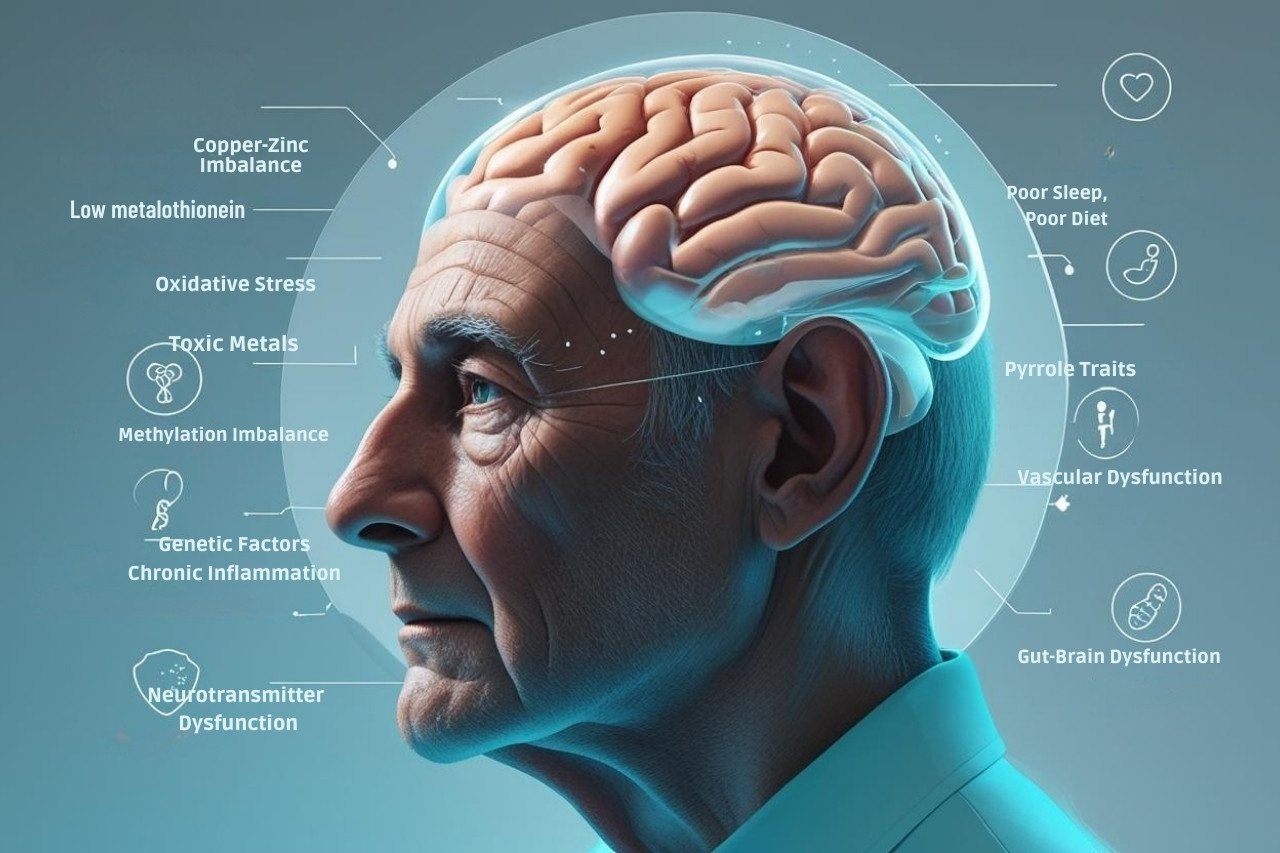
Alzheimer’s doesn’t have a single cause — it’s not one switch that flips, but a cascade of biological breakdowns that unfolds quietly, over years.
Here’s the part most people never hear…
Long before memory loss becomes obvious, the brain is often under chronic stress — from inflammation, oxidative damage, nutrient depletion, and impaired detoxification. Over time, these pressures erode the brain’s resilience.
At BalanSoul, we look beneath the diagnosis to understand what’s actually driving cognitive decline in your body.
Common contributors include:
- Copper–Zinc Imbalance – Elevated free (unbound) copper promotes oxidative stress and memory loss, while zinc is essential for neuronal repair and resilience
- Low Metallothionein Activity – Metallothionein helps detoxify heavy metals and regulate copper; dysfunction contributes to oxidative stress and neurodegeneration
- Oxidative Stress – High free-radical damage injures neurons and glial cells
- Methylation Imbalance – Methylation is the biochemical process your body relies on to switch genes on and off, repair DNA, and manufacture key neurotransmitters. Poor methylation affects detoxification, inflammation control, and neurotransmitter synthesis
- Toxic Metals – Lead, mercury, and cadmium impair memory and increase mood instability
- Pyrrole Traits – Can drive zinc and B6 loss, increasing oxidative stress tolerance issues
- Neurotransmitter Dysfunction – Especially low acetylcholine, dopamine, and serotonin
- Chronic Inflammation – Driven by stress, trauma, infection, insulin resistance, or lifestyle factors
- Gut–Brain Dysfunction – Poor nutrient absorption and microbiome imbalance disrupt brain signaling
- Genetic Factors – Including MTHFR, APOE4, and other SNPs affecting detox and repair
- Lifestyle Stressors – Sedentary living, poor sleep, ultra-processed foods, and chronic stress
In other words: memory loss is rarely “just aging.” It’s often the result of long-standing biochemical strain.
“Low activity of metallothionein—a protein that regulates zinc and detoxifies excess copper and heavy metals—is a key contributor to oxidative stress and neuronal injury in Alzheimer’s disease.”
(Dr. William Walsh)
Zinc and copper are both essential minerals for brain health — but only when they remain in balance.
In Alzheimer’s disease and early cognitive decline, we often see elevated free (unbound) copper alongside low or poorly utilised zinc. This imbalance can increase oxidative stress, disrupt neurotransmitter signalling, and accelerate neuronal damage.
Zinc is required to activate metallothionein, a protective protein that helps detoxify excess copper and heavy metals while shielding brain cells from inflammation and oxidative injury. When this system breaks down, the brain becomes more vulnerable to degeneration.
Zinc and metallothionein also help support the glial cells that maintain and protect synapses — the tiny junctions where memories are actually formed and retrieved. So when this protective system falters, it isn’t simply general “brain aging.” It’s the specific machinery behind memory formation losing the support it needs.
This is why restoring zinc–copper balance — and supporting metallothionein function — may be one of the most important and overlooked strategies in slowing cognitive decline and supporting long-term brain resilience.
In my own clinical experience, this is one of the most consistently under-tested imbalances I see in cognitive cases — and often one of the most correctable.
Functional Lab Testing to Uncover Root Causes
So how do we move from theory to clarity?
We test — not guess.
We use advanced functional lab testing to identify the specific biological stressors contributing to cognitive decline, allowing care to be personalized rather than protocol-based.
Testing may include:
- Zinc & Copper Ratio – A key marker of oxidative stress and detox capacity
- Ceruloplasmin / Free Copper – Identifies copper overload and metallothionein dysfunction
- Histamine & Methylation Profile – Helps reveal biotype tendencies and treatment responsiveness
- Pyrrole (HPL) Test – Screens for zinc/B6 depletion and stress intolerance
- Vitamin B12, Folate, Homocysteine, MMA – Critical for cognition, detoxification, and vascular health
- Omega-3 Index – Assesses anti-inflammatory support for brain cells
- OAT (Organic Acids Test) – Reveals mitochondrial stress, gut-derived toxins, and neurotransmitter metabolites
📌 Metallothionein function is often inferred indirectly through zinc, copper, ceruloplasmin, and oxidative stress markers — especially when zinc remains low despite supplementation.
This is also one of the reasons two people with almost identical symptoms can need very different treatment plans — the same “brain fog” can trace back to entirely different biochemistry underneath it.

Supplementation Plans (Tailored to You)
This is where precision matters most.
We don’t use generic “memory stacks.”
We design supplementation plans based on your biochemistry, genetics, and test results.
🔬 MT-Promotion Nutrients for Brain Protection
To support metallothionein function and antioxidant defense, we may use:
| Nutrient | Function |
| Zinc | Triggers MT synthesis and supports brain stability |
| Vitamin C & E | Antioxidants that stabilize MT and reduce free radicals |
| Selenium | Supports glutathione and detox pathways |
| Vitamin A & B6 | Required for MT gene expression |
| Manganese* | Extra antioxidant support (avoid in overmethylators) |
These nutrients work synergistically to:
- Detox excess copper
- Reduce neuroinflammation
- Protect neurons from oxidative injury
⚠️ Clinical Caveat: Some nutrients (e.g. NAC, inositol, manganese) may worsen symptoms if not matched to biochemistry. That’s why we test, titrate, and track — never guess.
Integrative Tools for Brain Recovery

Supplementation is only one piece of the puzzle.
At BalanSoul, we blend natural medicine, neuroscience, and emotional support to create a whole-person approach to brain health.
Here’s how each piece works together in practice:
Nutritional Psychiatry
- Targeted nutrients to support neurotransmitter repair
- Ongoing support for methylation balance, oxidative stress, and inflammation
Botanical Medicine
- Brain-supportive herbs such as Bacopa, Ginkgo, and Rhodiola
- Adaptogens to improve stress resilience and cognitive stamina
Supplementation & Biotype Guidance
- Evidence-based plans guided by functional labs
- Adjustments for MTHFR, histamine intolerance, pyrrole disorder, or copper excess
Lifestyle & Brain-Body Therapies
- Sleep hygiene, movement, and light therapy
- Mindfulness, trauma-informed support, and nervous system regulation
👉 Because the brain doesn’t heal in isolation.
It heals when the entire system becomes safer, calmer, and better supported.
What It Feels Like to Live With Alzheimer’s

These are the words of people we’ve had the privilege of supporting, shared with permission — because their honesty says more than any clinical explanation could.
Get George’s E-Book: Stop Losing Your Mind
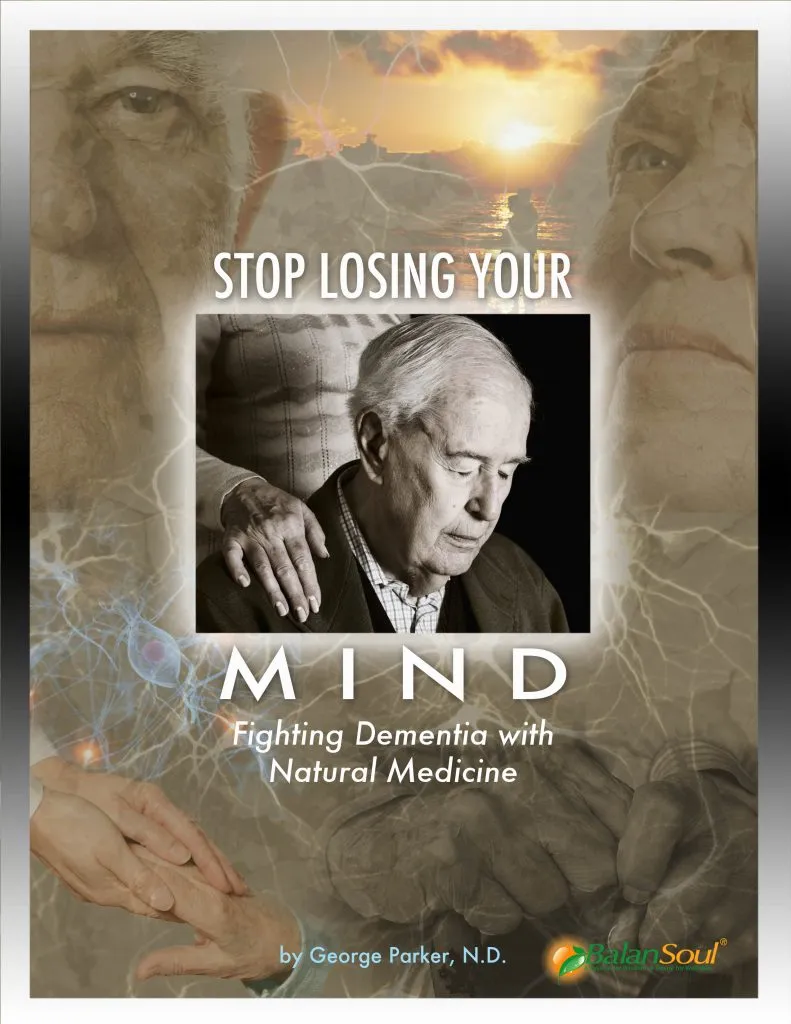
A practical, heartfelt guide for those navigating Alzheimer’s — whether for yourself, a parent, or someone you love.
This unique 200-page guide blends emotional insight, practical advice, and George’s personal reflections to help you approach memory loss with clarity, strength, and heart.
Inside the book:
5 hard truths no one tells you about Alzheimer’s — and how to face them
How to stay grounded and emotionally strong when someone you love begins to fade
The key differences between normal memory lapses and early Alzheimer’s
What not to say to someone with cognitive decline
Natural strategies to calm agitation, reduce confusion, and support dignity
Client Experiences
“I thought I was just aging. But now I feel mentally sharper, more focused, and more myself.”
“Getting my nutrients and copper levels right changed everything.”
Why Choose BalanSoul — And What to Expect When Working With Us
Alzheimer’s doesn’t just affect memory — it affects identity, relationships, confidence, and safety.
That’s why our care is personal, measured, and deeply human.
At BalanSoul, we don’t rush decisions or rely on one-size-fits-all protocols. We walk with you — patiently, strategically, and compassionately — whether you’re navigating early cognitive changes or supporting a loved one through decline.
Your Initial Consultation (90 Minutes)
Your first session is a comprehensive 90-minute consultation — not a quick check-in or symptom list.
This time allows us to truly understand the whole picture, including:
- Cognitive and emotional history
- Early warning signs or recent changes
- Nutrient status, medication use, and sensitivities
- Relevant pathology or prior testing
- Lifestyle factors, stress load, and sleep patterns
- Your goals, concerns, and pace preferences
This depth gives us clarity — so we move forward safely, thoughtfully, and proactively, rather than reactively.
What You’ll Receive...
Based on your history, biochemistry, and current stage, you’ll receive:
A personalised care plan, grounded in functional testing
Targeted nutritional and supplement guidance, aligned with Walsh Protocol and functional psychiatry principles
Clear education, so you understand what’s happening — and why
Lifestyle and nervous system support, tailored to cognitive resilience
A step-by-step roadmap, not a generic protocol
Our focus is always on addressing root causes — not just managing symptoms.
Ongoing Support (Not One-Off Care)
Cognitive decline — and recovery support — is not linear. Neither is our care.
As you move through each phase, we continue to:
Adjust nutrients and strategies as your system changes
Support nervous system regulation and emotional stability
Help caregivers understand what’s happening — and what matters most
Fine-tune the plan based on real-time feedback, not assumptions
This reflects the same commitment George describes at the very start of this page — caring for the person experiencing decline and the family holding on beside them, together.
This is collaborative care, at your pace — for individuals and families.
There Is a Way Forward — One Step at a Time
With informed, compassionate support, the nervous system can settle.
Symptoms can soften.
Clarity, confidence, and calm can return.
You don’t have to rush.
You don’t have to push.
And you don’t have to do this alone.
Common Questions
Do I need a diagnosis before I start?
No. Many of the people we support come to us while they’re still worried, before anything has been formally diagnosed — and that’s often exactly the right time to start.
Can I use this alongside medication or conventional care?
Yes, absolutely. Our functional naturopathic approach is designed to work alongside your existing medical care, not replace it.
Is this suitable for older adults or menopausal memory changes?
Absolutely. We tailor our protocols based on age, hormone stage, and lifestyle.
Will I have to change my diet completely?
No — we’ll work with what’s realistic for you. Even small dietary shifts can improve brain clarity.
Is this only for Alzheimer's?
Not at all. We also support mild cognitive impairment, brain fog, and prevention in high-risk individuals.
Ready to Begin Your Brain Recovery?
Take the first step toward clarity, calm, and confidence.
Book a free discovery call and let us help you understand your biochemistry, support your brain, and feel like yourself again.