Addiction Recovery with Integrative Psychiatry
A Functional Medicine Approach to Substance Use & Behavioral Addictions
Addiction is often the result of a nervous system that has been stuck in a state of high alert for too long — combined with biochemical imbalances that make cravings overwhelming, or deep emotional wounds that were never given space to heal.
But here’s what most people don’t realise — and this is crucial:
When the brain is overwhelmed for long periods, it doesn’t fail.
It adapts.
And it adapts for survival, not for wellbeing.
That adaptation can look like substance use, compulsive behaviours, or repeated patterns that temporarily relieve distress. Over time, those patterns become reinforced — not because a person is weak, but because the brain has learned that certain substances or behaviours help it cope when nothing else does.
Addiction is not a moral failing. It is a chronic, brain-based condition shaped by dopamine dysregulation, inflammation, trauma, nutritional deficiencies, stress physiology, and unmet emotional needs. When these factors combine, the brain adapts in ways that make certain substances or behaviours feel necessary just to function.
At BalanSoul, we approach addiction with both compassion and science.
We blend nutritional psychiatry, targeted functional testing, trauma-aware counselling, nervous system repair, and personalised supplementation to support genuine, lasting recovery — not just temporary coping.
And our goal is simple, but profound:
Help your brain feel safe again, so your body no longer needs the very things that hurt it.
What Is Addiction, Really?
Addiction isn’t a sign of weakness — it’s a sign your brain has been trying to cope with something overwhelming.
So what does that really mean?
Addiction is a complex neurobiological survival response, not a personal failure. Whether the pattern involves alcohol, prescription medications, weed addiction, gambling, food, phone addiction, or the need for help with porn addiction, the underlying mechanism is often the same.
Your brain finds something that temporarily soothes pain, stress, emptiness, emotional overload, or internal chaos.
At first, it works.
But over time, the same coping strategy begins to rewire the brain’s reward system. Dopamine signalling becomes distorted. Cravings intensify. Stress hormones remain elevated. The nervous system becomes conditioned to seek relief — even as life becomes harder, not easier.
Here’s how we understand addiction at BalanSoul:
It’s not about willpower.
It’s about a mismatch between what your nervous system needs and what it has access to.
When you view addiction through that lens, patterns that once felt confusing or shameful begin to make sense.
We look beneath the behaviour itself and explore the deeper contributors — trauma history, dopamine depletion, low GABA, inflammation, methylation imbalances, blood sugar instability, sleep disruption, and emotional overload — so healing can begin at the source rather than at the surface.
And here’s the hopeful part:
When the brain finally receives what it truly needed all along — safety, nourishment, stability, and support — the compulsive pull begins to soften.
Recovery stops feeling like a constant battle.
You deserve clarity.
You deserve calm.
You deserve freedom.

What Is Addiction, Really?

Addiction isn’t a moral failing—it’s a complex, chronic condition with deep roots in the brain and body.
Whether it’s alcohol, drugs, gambling, sugar, or technology, addictions often begin as coping tools. But over time, the brain’s natural balance becomes hijacked, rewired to crave the very things that harm it.
At BalanSoul, we treat addiction as a biochemical survival pattern, not a character flaw. We help you uncover the underlying imbalances—so you can reclaim clarity, stability, and freedom.
Root Causes of Addiction: What Drives It?
Addiction doesn’t come from weakness.
It comes from stressors that overwhelm the brain’s ability to cope.
At BalanSoul, we don’t stop at labels like cravings, compulsions, or dependency. We look beneath the surface to understand why the brain became vulnerable in the first place.
For many people, the roots lie in early trauma, chronic stress, or a nervous system that never learned how to switch off survival mode.
Here’s where things often start to connect.
In many cases, the gut and nervous system are inflamed, blood sugar regulation is unstable, sleep is disrupted, and the brain is simply trying to restore balance using the tools it has available.
By identifying these deeper contributors — neuroinflammation, digestive dysfunction, stress hormone dysregulation, trauma patterns, and neurotransmitter imbalances — we uncover what your brain and body have been trying to communicate all along:
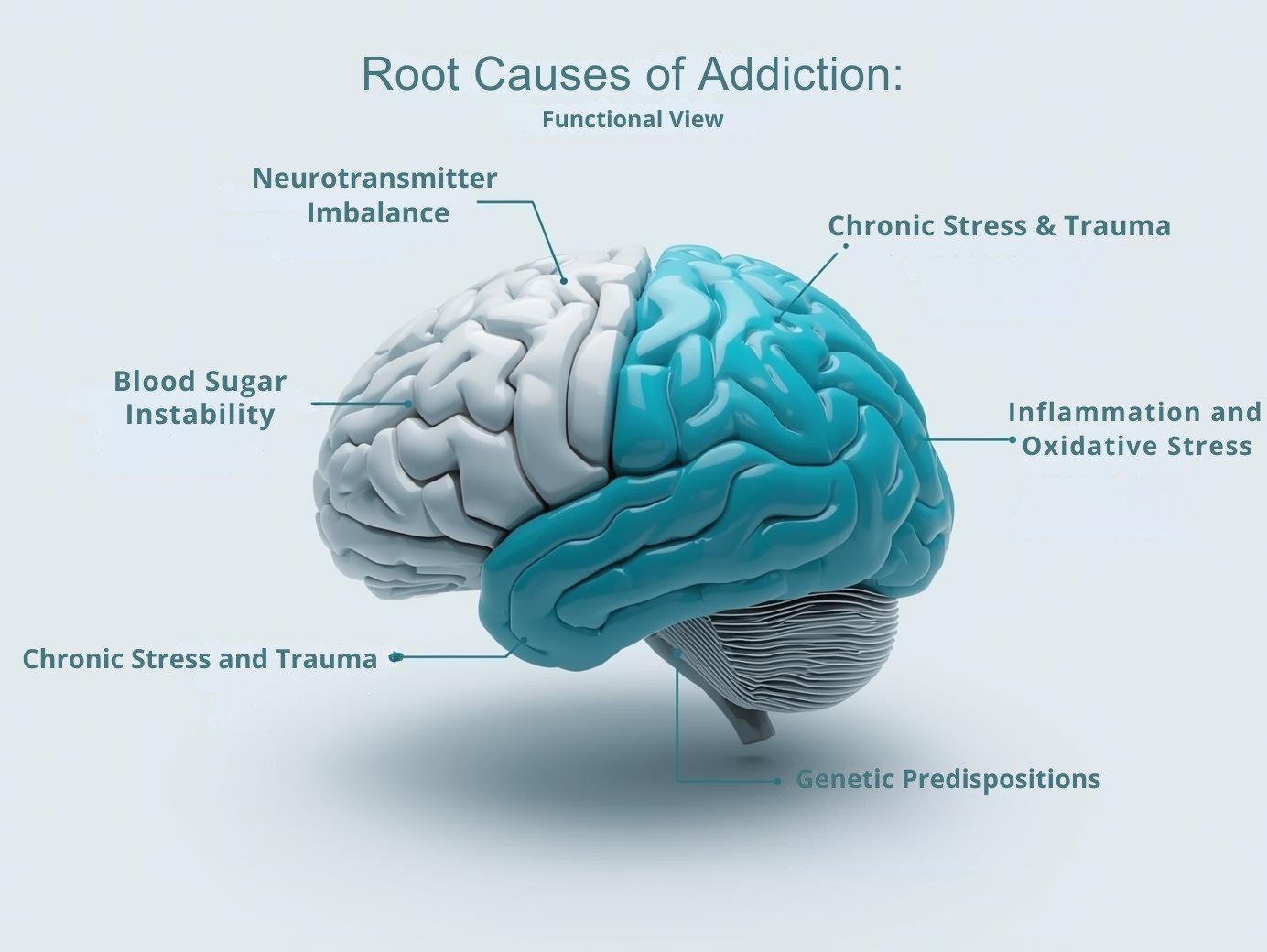
- Neurotransmitter imbalance — low dopamine, serotonin, or GABA can drive cravings, compulsions, and emotional overwhelm
- Inflammation & oxidative stress — often triggered by dysbiosis, toxins, infections, or trauma, affecting mood regulation and impulse control
- Blood sugar instability — rapid drops can mimic anxiety and trigger urges for quick dopamine “hits”
- Early-life trauma & chronic stress — rewires the stress response system, making addictive patterns more likely
- Genetic predispositions — variations in COMT, MTHFR, DRD2 and others can influence dopamine clearance, stress tolerance, and reward processing
🧪 Our functional assessments are designed to uncover these hidden drivers — so your treatment plan is tailored to what your brain truly needs to heal.
Signs & Symptoms of Addiction

Addiction is rarely obvious at first. It often shows up as overwhelm, exhaustion, or “just trying to get through the day.”
But here’s where things begin to shift:
Over time, these coping strategies reshape the brain’s reward and stress circuits — but with the right support, they are repairable.
Addiction affects every part of life — emotional, physical, relational, and biochemical.
What begins as a way to cope, numb, or feel “normal again” can slowly shift into patterns that feel harder and harder to break.
You might notice:
- Mood swings, depression, anxiety, or agitation
- Cravings, tolerance, or withdrawal
- Impulsive or risky behaviours
- Brain fog, poor concentration, or low motivation
- Sleep disruption (insomnia or oversleeping)
- Shame, isolation, or feeling “out of control”
We support recovery from many types of addiction, including:
- Alcohol
- Cannabis (weed addiction)
- Prescription medications (e.g., opioids, benzos)
- Stimulants (cocaine, meth, Ritalin misuse)
- Behavioural addictions, such as:
- Porn addiction
- Phone or screen addiction
- Food or pasta addiction (especially sugar/flour cravings)
- Gaming and gambling compulsions
🌿 Whether you are seeking alternatives to traditional addiction treatment centres, or looking for a more personalised, integrative approach, our functional psychiatry framework offers a compassionate pathway to long-term recovery — grounded in understanding, not judgement.
Functional Testing & Nutrient Assessment
Biochemical insights can be game-changers in addiction recovery.
Many people struggling with cravings, compulsive behaviours, or withdrawal symptoms are not “failing treatment” — they are dealing with underlying nutrient deficiencies, methylation issues, neurotransmitter imbalance, or chronic inflammation. These are patterns that standard addiction care often overlooks.
Here’s why this matters:
When we understand the biochemistry behind your symptoms, treatment becomes far more precise — and far more effective.
Based on your history and presentation, we may recommend targeted functional testing such as:
- Plasma zinc, copper, and ceruloplasmin
(to assess stress chemistry, mood regulation, and neurotransmitter balance) - Whole blood histamine
(to evaluate methylation status and biotype patterns) - Vitamin D, magnesium, and B-vitamin panels
- Organic Acid Testing (OAT)
(to assess neurotransmitter metabolites, mitochondrial stress, and detox capacity) - DNA profiling (e.g. MTHFR, COMT, MAO-A)
to understand dopamine regulation, stress reactivity, and nutrient processing
🧪 These tests help us map out the hidden drivers of addictive patterns — allowing us to tailor nutrient therapy, amino acid support, detoxification strategies, and neurological repair based on your exact biochemistry.
Nutritional & Integrative Support
Supporting recovery means rebuilding what’s depleted — and calming what’s overactive.
Many people with addiction aren’t battling a lack of willpower.
They’re battling low neurotransmitters, nutrient depletion, inflammation, and stress chemistry locked in a feedback loop.
Here’s the shift most clients notice:
When the brain receives what it’s genuinely missing, cravings soften, mood stabilises, and the nervous system finally gets space to heal.
Depending on your needs, natural supports may include:
- Zinc & B6 — foundational for neurotransmitter synthesis and methylation balance
- Magnesium — calms the nervous system, supports sleep, and eases muscle tension
- NAC (N-acetyl cysteine) — helps regulate glutamate, reduce cravings, and support detox pathways
- L-theanine or GABA — promote relaxation and reduce overstimulation
- Adaptogens such as Rhodiola or Ashwagandha — support adrenal function, resilience, and emotional steadiness

Do not self-prescribe — the wrong nutrient can worsen symptoms in certain biochemical patterns.
Nutritional & Integrative Support

Supporting the brain’s recovery involves rebuilding what’s depleted—and calming what’s overactive.
Some natural supports may include:
- Zinc & B6 — foundational in methylation and neurotransmitter synthesis
- Magnesium — for calming the nervous system and improving sleep
- NAC (N-acetyl cysteine) — helps regulate glutamate and reduce cravings
- L-theanine or GABA — promote relaxation and reduce anxiety
- Adaptogens like Rhodiola or Ashwagandha — support adrenal balance
Can Recovery Happen Without Medication?
Some clients wish to explore drug-free options.
Others want to reduce reliance on medication, or combine integrative supports with their current treatment for greater stability.
What’s important to know:
We never push abrupt withdrawal.
Instead, we collaborate with your prescriber to design a safe, gradual, and staged taper where appropriate — ensuring your nervous system remains supported every step of the way.
For many people, the most effective approach blends medication support with functional psychiatry and biochemical repair.
With the right testing and nutrient therapy:
- Symptoms often become easier to manage
- Emotional stability improves
- Medication needs may lessen over time
And here’s the truth:
There is no one-size-fits-all.
Recovery is personal — and our role is to help you find the safest, most sustainable version of it for your brain and body.

Our 3-Step Recovery Framework

Rebalance & Prepare for Change
Before asking your body to let go of a substance or behavior, we build you up. This includes restoring depleted nutrients, calming the nervous system, improving sleep and digestion, and preparing you emotionally to make lasting changes. Clients often say this is the first time they felt supported before trying to quit.
Restore Mood & Resilience
Once your system is more stable, we shift toward easing cravings, supporting motivation, and creating a daily rhythm that restores balance. We help you gently regulate your brain chemistry using amino acids, adaptogens, targeted supplements, and simple routines.
Maintain Recovery & Prevent Relapse
Long-term healing means working on the deeper patterns. Here, we support you with tools for stress resilience, emotional regulation, trauma recovery, and maintenance of brain health through nutrition and follow-up care.
Can Natural Medicine Help Like Methadone?
We don’t replace medical detox or prescribe pharmaceuticals — but we can support the brain in similar, stabilising ways when used appropriately and alongside proper care.
Some clients benefit from targeted nutrients such as NAC (N-acetylcysteine) to help reduce cravings and calm the glutamate pathways that drive compulsive use. Others respond well to herbal and nutritional formulas that build gradually in the body, easing nervous-system tension and helping smooth the transition as they prepare to taper.
These approaches are not substitutes for methadone or Suboxone, and we are always clear about that.
However, when used safely, strategically, and as part of a structured recovery plan, they can become valuable tools that support stability rather than abrupt suppression.
The goal is not replacement — it’s regulation.
By helping reduce the internal “drive” to use, these supports can allow the nervous system to feel steadier, calmer, and more in control, creating space for recovery work to take hold.
“I thought it was just stress…”
“I didn’t realise cravings and anxiety could mean something deeper…”
“I’d seen multiple therapists before anyone suggested testing…”
Why Choose BalanSoul — And What to Expect When Working With Us
Addiction doesn’t exist in isolation — it affects the brain, nervous system, emotions, relationships, and sense of safety in the world.
That’s why at BalanSoul, care is personal, measured, and deeply human.
We don’t rush decisions or apply one-size-fits-all protocols.
We work with you patiently, strategically, and compassionately — whether you’re early in recovery, navigating medication changes, supporting a loved one, or looking for a deeper integrative approach beyond traditional addiction treatment centres.
Your Initial Consultation (90 Minutes)
Your first session is a comprehensive 90-minute consultation — not a quick check-in or surface-level discussion.
This time allows us to truly understand the whole picture, including:
- Your substance use or behavioural patterns over time
- Triggers, stressors, trauma history, and nervous-system load
- Mood symptoms, anxiety, sleep disruption, and emotional regulation
- Medication use, responses, sensitivities, or previous tapers
- Nutritional status, cravings, energy, and stress resilience
- Relevant pathology, functional testing, or previous assessments
- Your goals, concerns, pace preferences, and support needs
This depth gives us clarity — so we move forward safely, thoughtfully, and proactively, rather than reactively.
What You’ll Receive
Based on your history, biochemistry, and current stage of recovery, you’ll receive:
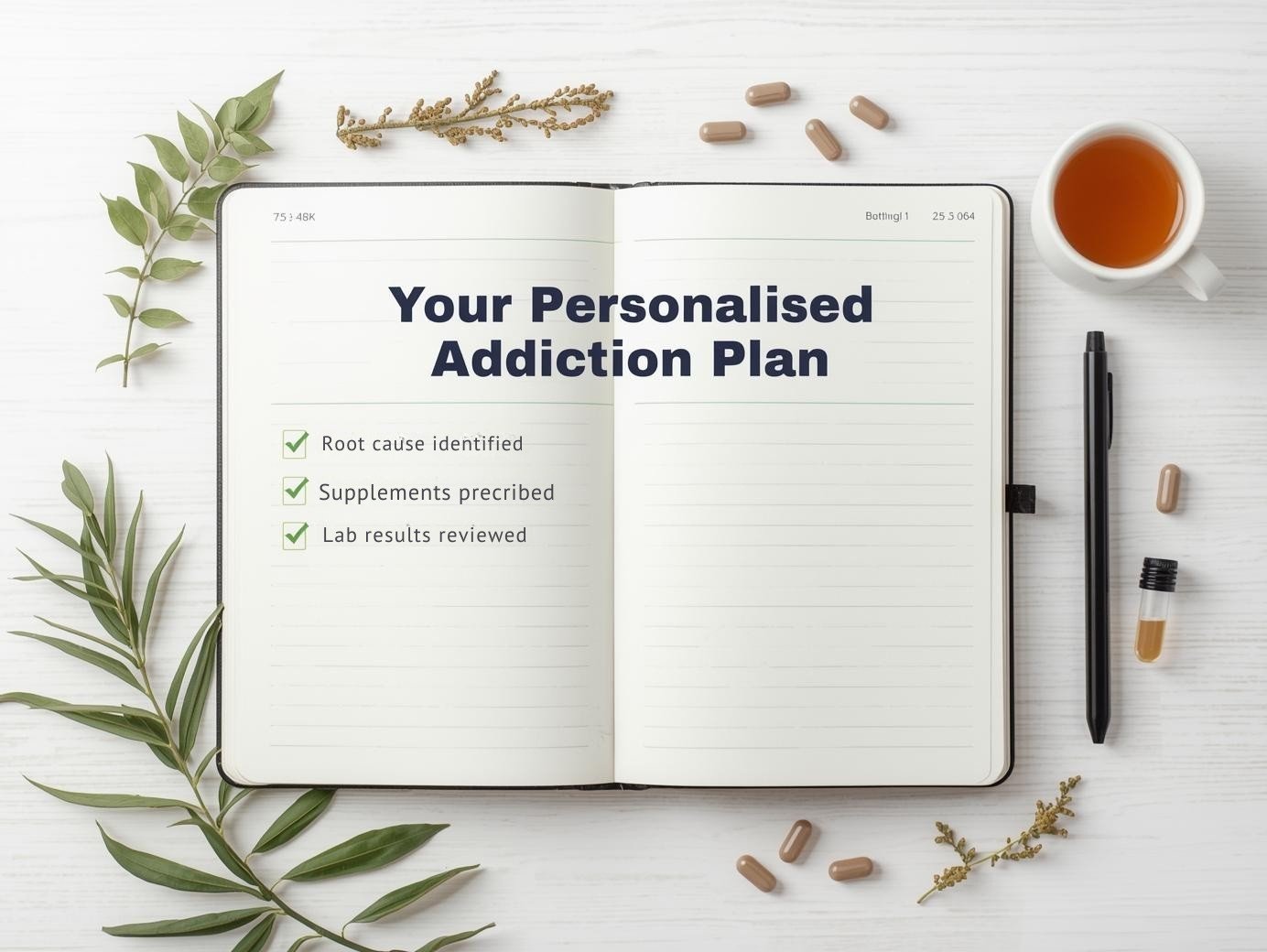
A personalised care plan grounded in functional and biochemical assessment
Targeted nutrition and supplement guidance, aligned with functional psychiatry and Walsh-informed principles where appropriate
Clear education, so you understand what’s happening in your brain and body — and why
Nervous-system and lifestyle support tailored to stability, rhythm, and resilience
A step-by-step roadmap, not a generic protocol or rigid program
Our focus is always on addressing root causes, not simply suppressing symptoms or chasing short-term fixes.
Ongoing Support (Not One-Off Care)
Addiction recovery — like nervous-system healing — is rarely linear.
Neither is our care.
As you move through each phase, we continue to:
Adjust nutrients and strategies as your system responds
Support nervous-system regulation and emotional stability
Help distinguish temporary setbacks from true relapse
Refine your plan using real-time feedback, not assumptions
This is collaborative care, at your pace — focused on restoring trust in your body, not forcing change or pushing willpower.
There is a path forward — one step at a time.
With informed, compassionate support, stability can improve, cravings can soften, and clarity can return.
You don’t have to rush.
You don’t have to push.
And you don’t have to do this alone.